


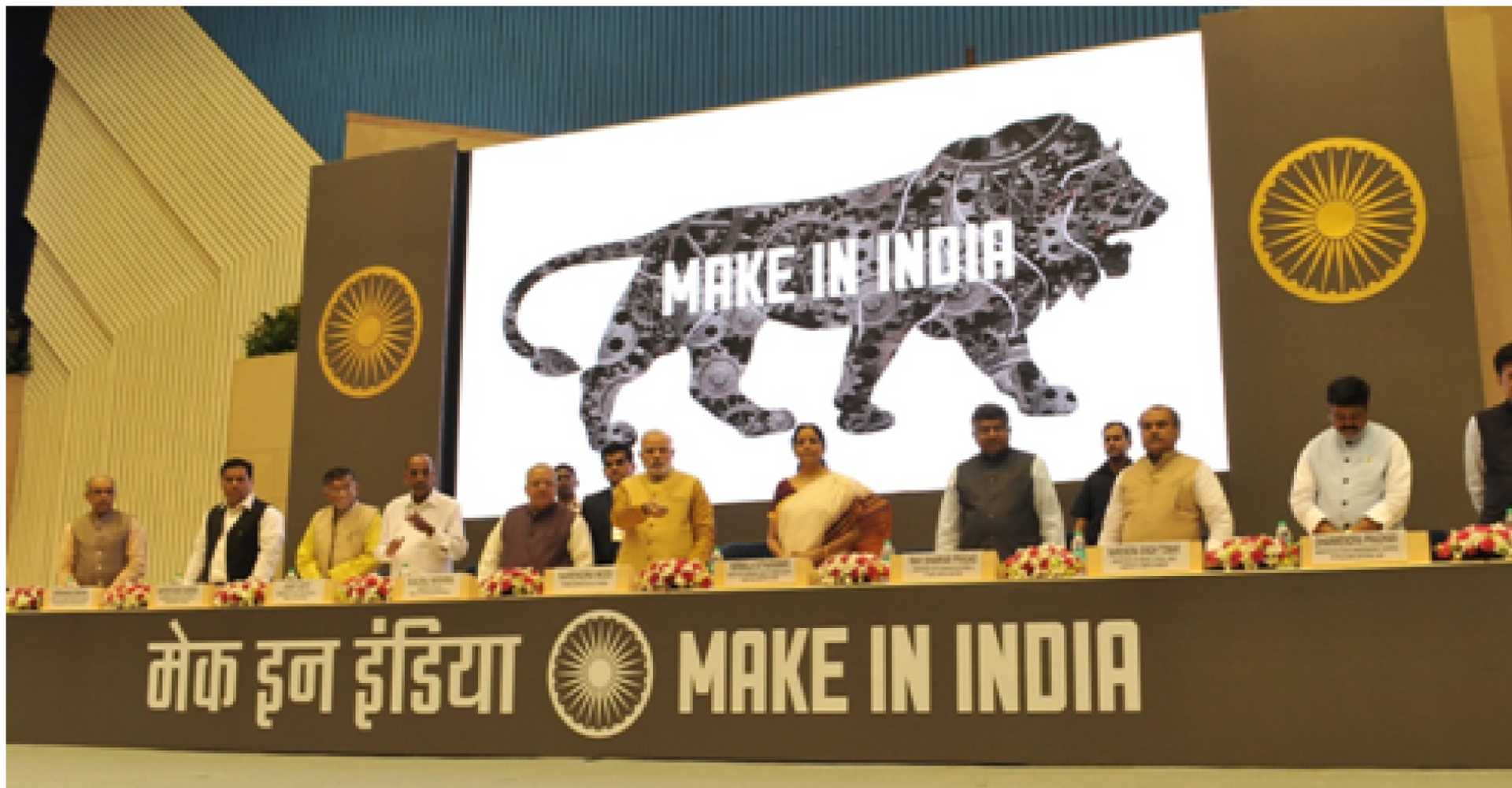

For years, policymakers have deliberated on strategies to boost manufacturing in India and position the country as a global manufacturing hub. However, it was under the leadership of Prime Minister Narendra Modi that the ambitious ‘Make in India’ initiative was swiftly launched. Within a short timeframe, this campaign aimed to attract investment, drive innovation, enhance skill development, safeguard intellectual property, and develop top-tier manufacturing infrastructure.
The ‘Make in India’ initiative rests on four foundational pillars, all geared towards fostering entrepreneurship not only in manufacturing but across various sectors:
Streamlined Processes: Recognizing the significance of an enabling business environment, ‘Make in India’ prioritizes ease of doing business. Various initiatives have been implemented to simplify regulations and licensing procedures throughout the business lifecycle.
Modern Infrastructure: Adequate infrastructure is crucial for industrial growth. The government is committed to developing industrial corridors and smart cities equipped with cutting-edge technology and integrated logistics. Existing infrastructure is being upgraded, and emphasis is placed on innovation, research, and workforce development.
Diversification into New Sectors: ‘Make in India’ has identified 25 key sectors spanning manufacturing, infrastructure, and services. Detailed information about these sectors is disseminated through interactive platforms and professional brochures. Significant relaxation in Foreign Direct Investment (FDI) norms has been introduced in sectors such as defense, construction, and railway infrastructure.
Shift in Mindset: Traditionally, the government was seen as a regulator by industries. ‘Make in India’ seeks to change this perception by fostering a partnership between the government and industry, with the government adopting a facilitative rather than regulatory role.
The success of the Make in India program can be attributed to collaborative efforts across various stakeholders, including union ministers, state governments, industry leaders, and knowledge partners. National workshops and deliberations have led to the formulation of action plans aimed at boosting the manufacturing sector’s contribution to GDP.
The program’s collaborative approach has also extended to global partnerships, exemplified by interactions between India and the United States. Obsolete frameworks have been replaced with transparent and user-friendly systems, resulting in increased investment, innovation, skill development, and infrastructure enhancement.
Furthermore, efforts to improve the ease of doing business in India have been accelerated under the Make in India program. This includes the introduction of IT-driven application processes, rationalization of licensing rules, and amendments in labor laws.
Today, India’s credibility as an investment destination is stronger than ever, with visible momentum and optimism surrounding the Make in India initiative. Multiple enterprises are embracing its ethos, propelling India towards its goal of becoming a global economic powerhouse.
Our vision is to address the “United Nations’ 2030 Agenda for Sustainable Development along with India 2030” by adopting a holistic strategy till 2030, through a comprehensive approach between the hierarchy of Governance and their stakeholders.


Vipin Kumar Sahu is the founder of the Indus Initiative Council and has served various Hon’ble Member of Parliament as their Political Secretary and in present working with Hon’ble Member of Parliament Shri Sangam Lal Gupta, Member of Parliament from Pratapgarh(U.P) who is also holding the office of National General Secretary BJP OBC Morcha. Mr. Sahu holds a Master’s Degree in Journalism and is having a vast experience of over 20 years in the field of Journalism and has in-depth knowledge and knowhow for the Government affairs, Schemes and Policies.
He also own’s monthly national news Magazine Rashtriya Chanakya Varta, which is performing not only the media dharma but also carrying out the social responsibility from the dais of media. Rashtritya Chanakya Varta also works over the Central and State government schemes and policies and advertises them to bring more awareness in public about the same.
Prior to founding Indus Initiative Council, Vipin always had a vision of facilitating the outreach of various social welfare schemes to the grassroots level through the concept of Constituency Development through UNSDGs. He further looks forward to build a holistic synergy between top-down model of governance by collaborating with private investors, technologists, policy- makers, thinkers amongst various others.
Vikas Singh graduated in Mass Communication and also an MBA in Marketing. He is known for his Out of the Box thinking, Creativity, Lucrative ideas for government affairs and strategies.
He has worked with various multinational companies in various engagements and helped clients across the globe in their strategy. He also witnessed how invaluable solid guidance and support of entrepreneurs, NGOs and different bodies working in the public sector can be, which serves him well in his role at Indus Initiative Council.
He started his career in 2011 and has vast knowledge for the Corporate Planningin Marketing, Strategy, Political affairs and Government Schemes and serves as an advisor to multiple Non For Profit Organizations and Private Players.
Vinod Kataria, post graduated with a degree in Hindi literature from the Delhi University and currently a Law professional, in Delhi and Gurugram. For sixteen years he was a journalist and wrote for many national and international magazines including PC Magazine India, Electronic Components—Hong Kong, EDN Asia—Singapore, ECN Asia—Singapore, Electronics Mega Mind—India, Computer Mega Mind—India, Chanakya Varta—India, Base Line—India.
Vinod Kataria has a hobby of social work and worked voluntarily for many NGO and Trusts. He is holding the post of President with Universal Care, an NGO working for upliftment of the need and poor.
In 2012, Vinod Kataria left the journalism and became a full-time lawyer and freelance journalist. Currently, he is a lawyer and practicing in Supreme Court, Delhi High Court, Delhi District Courts and Gurugram District Courts.